Regional Dynamics: Consumer Spending Patterns in the Southeast
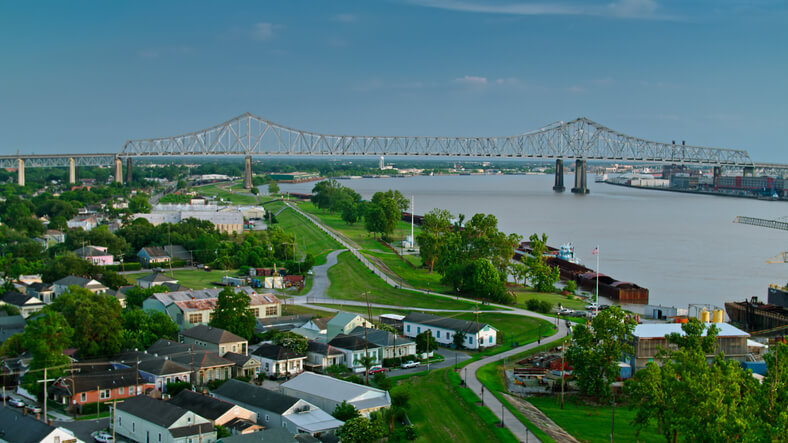
Trends in the world of business often begin as a ripple in major urban centers, evolving into a tidal wave of opportunity, cascading into suburban and rural regions. By delving into five major cities in the U.S. Southeast region, we aim to provide prospective franchisees with invaluable insights into thriving sectors and emerging franchise opportunities.
Jacksonville, FL
As one of Florida's largest cities, Jacksonville boasts a thriving economy, making it an attractive destination for franchise businesses seeking growth opportunities. Let's delve into the data to uncover why Jacksonville is primed for franchise success and explore emerging industries that align with the city's demographic trends.
Population Growth and Demographics
Population Dynamics: Jacksonville's population has been steadily increasing over the years, with an estimated 975,491 residents in 2023 and a projected growth to 1.07 million by 2028.
Consumer Expenditure: Jacksonville residents demonstrate diverse spending habits, with significant allocations across various expenditure categories. The total annual consumer expenditure in 2023 amounted to approximately $27.28 billion in Jacksonville.
Industry Spending
Food: With a total consumer expenditure of $4.01 billion on food and beverages in 2023, Jacksonville's culinary scene presents a lucrative opportunity for food franchises.
Health Care: Expenditures of $2.28 billion in health care and $366.09 million in personal care highlight Jacksonville's focus on well-being.
Home Services: Annual expenditures of $958.58 million in furnishings and equipment indicate a thriving market for home decor, renovation services, and home improvement retail franchises.
Transportation: With a substantial $4.96 billion allocated to transportation in 2023, Jacksonville residents prioritize mobility and convenience.
Retail Gap Analysis
Jacksonville’s retail sector presents compelling opportunities for franchise expansion, highlighted by substantial gaps between potential and actual sales in the healthcare industry. For instance, Health & Personal Care Stores and Pharmacy & Drug Stores demonstrate substantial disparities, suggesting unmet consumer demand.
Specifically, potential sales for Health & Personal Care Stores are estimated at $500.85 million, yet actual sales stand at $459.8 million. Similarly, Pharmacy & Drug Stores indicate potential sales of $437.85 million against actual sales of $385.15 million. These gaps underscore the untapped market potential, offering fertile ground for franchise expansion and revenue enhancement.
Charlotte, NC
Charlotte, North Carolina presents a compelling landscape for franchise expansion. Through an analysis of demographic trends and expenditure data, we uncover why Charlotte stands as a promising hub for franchise ventures.
Population Growth and Demographics
Charlotte's population has steadily surged, reaching an estimated 896,209 residents in 2023 and projected to surpass 981,436 by 2028. This sustained growth trajectory underlines the city's appeal as a burgeoning market for franchise businesses.
Consumer Expenditures
Charlotte residents demonstrate diverse spending behaviors. In 2023, the total annual consumer expenditure in Charlotte amounted to $30.9 billion, reflecting robust market demand and economic activity.
Industry Spending
Food: With an expenditure of $4.49 billion on food and beverages, Charlotte's culinary scene emerges as a lucrative arena for franchise exploration.
Health Care: Expenditures of $2.51 billion in health care underscore Charlotte's focus on well-being and quality of life.
Home Services: Charlotte's burgeoning population fuels demand for home improvement services, with an annual expenditure of $1.1 billion in furnishings and equipment.
Transportation: With a substantial $5.56 billion allocated to transportation, franchise opportunities in ride-sharing services, automotive maintenance, and transportation-related retail can cater to the city's urban lifestyle.
Charlotte's automotive sector presents a fascinating landscape of untapped potential, as evidenced by the stark differential between potential and actual sales from the gap report. According to the report, while new car dealerships have a potential sales figure of $2.19 billion, the actual sales stand at $1.71 billion, indicating a significant gap of $480 million. Similarly, used car dealerships showcase a potential sales value of $226.16 million, contrasting with the actual sales of $145.16 million, revealing a considerable gap of $81 million. Moreover, recreational vehicle dealerships boast a potential sales estimation of $49.59 million, while the actual sales reflect a modest $5.06 million, highlighting a substantial gap of $44.53 million.
This disparity between projected and realized revenues underscores a compelling opportunity for franchise expansion and innovation in the automotive sector. With Charlotte's growing population, there exists a ripe automotive market for franchises to capitalize on, whether through enhancing marketing strategies, diversifying product offerings, or improving customer experiences.
Richmond, VA
In the landscape of the Southeast, Richmond, Virginia, emerges as a prime destination for franchise expansion, boasting a resilient economy and promising demographics. Let's dive into the data to uncover why Richmond is ripe for franchise prosperity.
Population Dynamics and Growth Trends
Richmond's population trajectory reflects steady growth, with an estimated 230,595 residents in 2023 and a projected increase to 244,153 by 2028. This upward surge signals an enticing locale for franchise expansion, buoyed by a burgeoning consumer base eager for innovative offerings.
Consumer Expenditures
In 2023, Richmond's total annual consumer expenditure amounted to approximately $7.32 billion, indicative of robust market demand and economic vitality.
Industry Spending
Food: With an expenditure of $1.07 billion on food and beverages, Richmond's culinary scene presents an enticing domain for food-related franchises.
Health Care: Expenditures of $602.09 million in health care underscore Richmond's emphasis on well-being, offering potential for franchise ventures in fitness centers, health services, and personal care products.
Transportation: With a substantial $1.31 billion allocated to transportation in 2023, Richmond could be a budding environment for an automotive franchise.
The gap report in Richmond identifies several sectors within the retail industry where potential sales surpass actual sales, indicating opportunities for franchise expansion and revenue growth. For instance, Children's and Infants' Clothing Stores demonstrate a significant potential for growth, with estimated potential sales of $10.41 million compared to actual sales of $4.16 million, representing a substantial gap of 60%. Similarly, Family Clothing Stores exhibit promising potential, with $64.92 million in potential sales contrasted with $33.85 million in actual sales, indicating a 48% gap.
Understanding these discrepancies in potential versus actual sales can inform franchise businesses' decision-making processes, enabling them to target sectors with high growth potential and tailor their strategies to meet consumer demand effectively.
New Orleans, LA
New Orleans, Louisiana offers an enticing location for franchise expansion, supported by promising consumer spending.
Consumer Expenditure
In 2023, the city's total annual consumer expenditure amounted to approximately $10.62 billion, indicative of a robust economic activity.
Industry Spending
Food: An annual consumer expenditure of $1.56 billion on food and beverages could make New Orleans a hot spot for new food franchises.
Health Care: Expenditures of $879.79 million in health care and $142.42 million in personal care reflect New Orleans' focus on well-being.
Transportation: With a substantial $1.89 billion allocated to transportation in 2023, New Orleans residents prioritize mobility, marking potential ground for new automotive franchises.
Retail Gap Analysis
The retail gap report for New Orleans reveals insights into potential sales versus actual sales across various sectors.
Home Furnishings Stores: Potential sales of $111.63 million contrast with actual sales of $49.75 million, indicating a significant gap ripe for franchise ventures.
Electronics and Appliance Stores: With potential sales of $83.59 million compared to actual sales of $32.79 million, there's a notable opportunity for franchise growth in this sector.
General Merchandise Stores: General Merchandise Stores, including department stores and warehouse superstores, demonstrate promising potential for franchise growth. The potential sales in this sector amount to $716.62 million, whereas actual sales stand at just $650.2 million.
Nashville, TN
As one of Tennessee's largest cities and the state’s capital, Nashville is an attractive destination for franchise businesses seeking growth opportunities.
Population Growth and Demographics
Population Dynamics: Nashville's population has been steadily increasing over the years, with an estimated 686,496 residents in 2023 and a projected growth to 722,156 by 2028.
Total Annual Consumer Expenditure (2023): The total annual consumer expenditure in Nashville in 2023 amounted to approximately $23.06 billion.
Industry Spending
Food: With a total expenditure of $3.37 billion on food and beverages in 2023, Nashville's food scene presents promising ground for new culinary franchises.
Health Care: Annual consumer expenditures of $1.89 billion in healthcare highlight Nashville's interest in health and wellness businesses.
Home Services: Annual expenditures of $816.13 million in furnishings and equipment indicate a thriving market for home decor, renovation services, and home improvement retail franchises.
Transportation: With a substantial $4.16 billion allocated to transportation in 2023, Nashville residents prioritize transportation convenience.
Retail Gap Analysis
In Nashville’s food and beverage sector, there are significant disparities between potential and actual sales. Grocery stores exhibit a potential sales figure of $1.39 billion, with actual sales slightly lower at $1.33 billion, indicating a potential growth opportunity of $60 million. Convenience stores show a similar trend, with a potential sales figure of $53.74 million, contrasting with actual sales of $39.82 million, representing a gap of $13.92 million. The specialty markets of meat, fish, and fruit and vegetable markets also present opportunities for growth, with considerable gaps between potential and actual sales. These food sectors in Nashville offer untapped potential for franchise expansion.
Conclusion
In conclusion, the Southeastern region of the United States presents a fertile ground for franchise expansion, driven by robust population growth, diverse consumer spending habits, and emerging market opportunities. Through our exploration of major cities such as Jacksonville, Charlotte, Richmond, New Orleans and Nashville, we've uncovered a wealth of insights into key sectors such as food, healthcare, home services, transportation, and retail.
This data-driven analysis, coupled with retail gap assessments, signal untapped potential for franchise growth. By leveraging these insights, prospective franchisees can make informed decisions and strategically position themselves to capitalize on the evolving landscape of entrepreneurship in the Southeast.
Other Franchises Looking For Owners Like You
Want to compare franchise opportunities side by side? Start Here
