Retail Insights: Analyzing Consumer Spending in Five Northeastern Cities
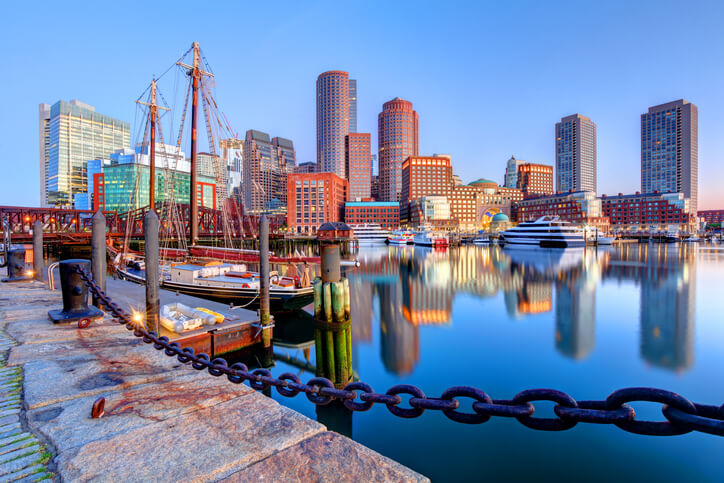
In the labyrinth of commerce, where market dynamics intersect with consumer behaviors, savvy franchisees recognize the pivotal role played by major urban centers in shaping regional business landscapes. These bustling metropolises act as crucibles of innovation, where trends percolate and propagate, heralding the dawn of new opportunities.
In our quest to unlock the secrets of sustainable growth, we embark on a comprehensive analysis of five Northeastern powerhouses: Boston, Philadelphia, Providence, Newark and Baltimore. By scrutinizing consumer spending patterns and market opportunities, we aim to distill actionable insights for franchisees.
Boston, MA
Boston, a bustling economic center in the Northeast, is renowned for its storied history. Delving into consumer spending data provides invaluable insights into the nuances shaping Boston's retail landscape.
Total Annual Consumer Expenditure
In 2023, Bostonians collectively spent approximately $26.42 billion on household expenses. This expenditure can be further categorized into non-retail and retail expenditures, highlighting the diverse range of goods and services consumed by residents.
Non-Retail Expenditure: Non-retail expenditures accounted for $14.19 billion, encompassing essential services such as shelter, transportation, utilities, and healthcare. These categories reflect the fundamental needs of Boston residents and provide insight into their spending priorities.
Retail Expenditure: Retail expenditures totaled $12.23 billion, covering a wide array of discretionary spending categories. From apparel and entertainment to food and beverages, Bostonians allocate a significant portion of their budget to retail purchases.
Monthly Household Consumer Expenditure
Breaking down consumer expenditure on a monthly basis offers a granular perspective on Bostonians' spending habits and preferences across different categories. In 2023, the average monthly household expenditure in Boston was $7,944, with a notable allocation towards both non-retail and retail expenditures.
Non-Retail Expenditures: Non-retail expenditures accounted for $4,268 per month. These expenditures reflect the cost of living in Boston and the necessary investments required to maintain a high quality of life in the city.
Retail Expenditures: Retail expenditures totaled $3,677 per month, highlighting Bostonians' discretionary spending habits across various categories. From dining out and entertainment to personal care and household operations, residents allocate a significant portion of their monthly budget to retail purchases.
Key Spending Categories
Analyzing the breakdown of consumer expenditure across different categories provides insight into Bostonians' consumption patterns and preferences:
Food and Beverages: With a total expenditure of $3.81 billion annually and $1,146 per month on average, Bostonians prioritize dining experiences and culinary indulgences.
Entertainment: Boston residents allocate approximately $1.53 billion annually and $460 per month on entertainment activities, including leisure outings, cultural events, and recreational pursuits. This expenditure reflects the city's rich arts scene, vibrant nightlife, and diverse range of entertainment options available to residents.
Transportation: With an annual expenditure of $4.63 billion and a monthly allocation of $1,392 per household, transportation remains a significant expense for Bostonians. Whether commuting to work, exploring the city, or traveling beyond its borders, residents rely on various transportation modes to navigate Boston's bustling urban environment.
Underserved Market Opportunities
While Boston boasts a thriving retail landscape, certain segments remain underserved, presenting opportunities for franchise businesses to fill gaps in the market. According to the Gap Report, the automotive sector in Boston shows promising potential for growth and development.
Automotive Sector Analysis
Motor Vehicle & Parts Dealers: In 2023, Boston witnessed actual sales of just $603.39 million in the motor vehicle and parts dealers sectors. The potential sales in this category were estimated to be a much larger $2.37 billion.
New Car Dealers: Bostonians spent $468.95 million annually on new car dealerships, with potential sales reaching $1.81 billion. This suggests a robust market demand for new vehicles, providing opportunities for franchise businesses catering to the new car market.
Used Car Dealers: Despite a lower actual expenditure of $32.43 million, the used car dealers segment demonstrates significant growth potential, with potential sales estimated at $186.19 million. Franchisees specializing in pre-owned vehicle sales can tap into this market segment and capitalize on the rising demand for affordable and reliable transportation options.
By strategically entering these underserved segments of the automotive market, franchise businesses can diversify their offerings, attract new customers, and establish a strong presence in Boston's retail landscape.
Philadelphia, PA
Philadelphia is a key player in the retail landscape of the Northeast. Analyzing consumer spending data provides valuable insights into the emerging trends shaping Philadelphia's retail sector.
Population and Household Statistics
Estimated Population (2023): 1.58 million
Estimated Households (2023): 646,922
Household Income and Expenditure Insights
Estimated Average Household Income (2023): $97,451
Projected Average Household Income (2028): $107,854
Total Annual Consumer Expenditure (2023): $44.2 billion
Total Non-Retail Expenditure: $23.54 billion
Total Retail Expenditure: $20.65 billion
Key Retail Spending Categories
Food and Beverages: $6.51 billion annually, with an average monthly expenditure of $839 per household.
Transportation: $7.87 billion annually, with an average monthly expenditure of $1,013 per household.
Shelter: $9.45 billion annually, with an average monthly expenditure of $1,217 per household.
Entertainment: $2.49 billion annually, with an average monthly expenditure of $321 per household.
Health Care: $3.67 billion annually, with an average monthly expenditure of $473 per household.
Understanding these trends can help retailers and franchise businesses align their offerings with the evolving preferences and spending habits of Philadelphia's residents.
Underserved Market Opportunities
Analyzing the retail landscape in Philadelphia unveils significant gaps between potential and actual sales across various sectors. These gaps represent untapped potential for growth and expansion, offering valuable opportunities for businesses, particularly franchisees, to capitalize on emerging trends and consumer demands.
Children's, Infants', and Family Clothing Stores: Despite a combined estimated potential of $455.9 million, actual sales fall short at $252.28 million, indicating an underserved market ripe for exploration and development.
Women's Clothing Stores: With an estimated potential of $146.76 million and actual sales of $139.98 million, there's a slight market gap that presents an opportunity for new businesses in this sector.
Clothing Accessory Stores: Although the estimated potential is $31.74 million, actual sales stand at just $20.28 million.
Cosmetics and Beauty Stores: A significant gap exists in this sector, with an estimated potential of $36.6 million, yet actual sales only amount to $11.62 million. This underscores the potential for expansion and innovation to address unmet consumer needs and preferences.
Providence, RI
Understanding the nuances of consumer spending provides valuable insights into the evolving trends shaping Providence's retail landscape.
Total Annual Consumer Expenditure
In 2023, residents of Providence collectively spent approximately $4.96 billion on household expenses.
Non-Retail Expenditure: Essential services such as shelter, transportation, utilities, and healthcare accounted for a significant portion of Providence's consumer spending, totaling $2.64 billion in 2023.
Retail Expenditure: Retail expenditures in Providence amount to approximately $2.32 billion annually, covering a spectrum of discretionary spending categories.
Monthly Household Consumer Expenditure
Breaking down consumer expenditure on a monthly basis provides deeper insights into Providence residents' spending habits.
Non-Retail Expenditures: Providence residents allocated an average of $3,125 per month to non-retail expenses.
Retail Expenditures: Retail expenditures averaged $2,747 per month per household.
Key Spending Categories
Analyzing consumer expenditure across different categories reveals notable trends in Providence's retail landscape.
Food and Beverages: Providence residents prioritize dining experiences, with an annual expenditure of $726.62 million in the food and beverages sector.
Transportation: With an annual expenditure of $887.7 million, transportation remains a significant expense for Providence residents, reflecting the city's urban lifestyle and reliance on various modes of transportation.
Entertainment: Providence residents allocate approximately $281.52 million annually towards entertainment activities, highlighting the city's arts scene, cultural events, and recreational pursuits.
Underserved Market Opportunities
While Providence boasts a strong retail landscape, certain segments within the automotive sector remain underserved, presenting lucrative opportunities for franchise businesses to capitalize on.
Automotive Sector Analysis
Motor Vehicle & Parts Dealers:
Actual Sales: $178.75 million
Potential Sales: $453.16 million
Analysis: Providence's motor vehicle and parts dealers sectors demonstrate significant potential for growth, with potential sales far exceeding actual sales.
New Car Dealers:
Actual Sales: $121.78 million
Potential Sales: $346.64 million
Analysis: Providence residents spend a considerable amount on new car dealerships, indicating a robust market demand for new vehicles. Franchise businesses catering to the new car market have ample opportunities to expand their presence and cater to the city's automotive needs.
Used Car Dealers:
Actual Sales: $31.93 million
Potential Sales: $35.74 million
Analysis: The used car dealers segment in Providence demonstrates growth potential, with potential sales exceeding actual sales. Franchisees specializing in pre-owned vehicle sales can capitalize on the rising demand for affordable transportation options.
Newark, NJ
Newark, New Jersey, stands as a pivotal economic center in the Northeast.
Population Dynamics
Estimated Population (2023): 298,286
Estimated Households (2023): 109,921
Economic Outlook
Estimated Average Household Income (2023): $72,224
Projected Average Household Income (2028): $79,349
Projected Annual Change (2023-2028): $7,125 (2.0%)
Historical Annual Change (2000-2023): $34,476 (4.0%)
Consumer Expenditure Breakdown (2023)
Total Household Expenditure: $6.14 billion
Total Non-Retail Expenditure: $3.27 billion
Total Retail Expenditure: $2.87 billion
Monthly Household Consumer Expenditure (2023)
Total Non-Retail Expenditure: $2,477 (53.2%)
Total Retail Expenditure: $2,176 (46.8%)
Key Spending Categories (Annual)
Food and Beverages: $913.53 million
Transportation: $1.09 billion
Shelter: $1.32 billion
Entertainment: $340.96 million
Health Care: $512.48 million
Consumer Spending Insights (Monthly)
Food and Beverages: $693 (14.9%)
Transportation: $828 (17.8%)
Shelter: $1,003 (21.6%)
Entertainment: $258 (5.6%)
Health Care: $389 (8.4%)
Unveiling Newark's consumer landscape provides businesses with a roadmap for strategic planning and market positioning, highlighting opportunities for growth and adaptation in this dynamic urban environment.
Underserved Market Opportunities
Jewelry Stores: With potential sales reaching $10.61 million, these stores surpass actual sales of $6.84 million by 36%.
Home Furnishing Stores: Potential sales totaling $17.67 million outshine actual sales of $9.76 million by a significant 45% margin.
Specialty Food Markets: Potential sales, standing at $4.62 million, outstrip actual sales of $3.04 million by a noteworthy 34%.
Family Clothing Stores: These stores boast potential sales of $54.15 million, showcasing a substantial 68% increase over actual sales, which stand at $17.32 million.
Shoe Stores: With potential sales amounting to $22.38 million, these stores demonstrate a 21% increase over actual sales, which tally at $17.58 million.
Baltimore, MD
Navigating franchising in Baltimore, MD requires businesses to grasp the intricacies of its consumer base.
Population
Estimated Population (2023): 572,973
Estimated Households (2023): 247,620
Estimated Average Household Income (2023): $98,730
Projected Average Household Income (2028): $109,538
Total Annual Consumer Expenditure (2023)
Total Household Expenditure: $17.09 billion
Total Non-Retail Expenditure: $9.12 billion
Total Retail Expenditure: $7.97 billion
Monthly Household Consumer Expenditure (2023)
Total Non-Retail Expenditure: $3,069 (53.3%)
Total Retail Expenditure: $2,684 (46.7%)
Key Spending Categories (Annual)
Food and Beverages: $2.51 billion
Transportation: $3.04 billion
Shelter: $3.66 billion
Entertainment: $967.81 million
Health Care: $1.41 billion
Monthly Household Consumer Expenditure (2023)
Food and Beverages: $844 (14.7%)
Transportation: $1,022 (17.8%)
Shelter: $1,232 (21.4%)
Entertainment: $326 (5.7%)
Health Care: $475 (8.2%)
Underserved Market Analysis
Women's Clothing Stores: With potential sales of $56.95 million and actual sales of $44.23 million, there is potential for further revenue generation in women's clothing retail.
Children's and Family Clothing Stores: While potential sales are $24.4 million, actual sales stand at just $20.84 million. Enhancing offerings for children's and family clothing could help bridge this gap.
Furniture Stores: Potential sales are $112.28 million, while actual sales amount to $37.37 million.
Electronics Stores: With potential sales of $134.86 million and actual sales of $101.66 million, there is room for improvement in electronics retail to better meet consumer needs.
Pet Supply Stores: With potential sales of $62.91 million and actual sales of $11.15 million, there is significant potential for growth in pet supply retail in Baltimore.
Baltimore, MD, presents various opportunities for retailers to address underserved markets across different sectors. By understanding consumer preferences and adapting strategies to meet evolving demands, businesses can effectively capture market share and drive growth in the retail landscape.
Conclusion
Market opportunities in major cities throughout the Northeastern U.S. underscores the vast potential for those looking to invest in new ventures. These urban centers are not only hubs of economic vibrancy but also influential trendsetters, with their consumer preferences often reflected in nearby smaller cities. By gaining insight into these market dynamics and consumer behaviors, entrepreneurs can strategically position their ventures to cater to shifting consumer demands, stimulate sales growth, and build successful franchise operations across the Northeastern U.S. region.
Other Franchises Looking For Owners Like You
Want to compare franchise opportunities side by side? Start Here
