Back to Blog
Automotive Franchise Profitability and Outlook

Automotive franchise profitability and outlook for 2026 are shaped by one of the more reliable demand drivers in franchising: Americans are holding onto their vehicles longer than ever. The average U.S. vehicle is now approximately 13 years old, a record high, according to S&P Global Automotive Insights, and older vehicles require more frequent maintenance, more parts replacement, and more diagnostic attention.
At the same time, Cox Automotive projects new vehicle sales will dip to 15.8 million units in 2026, down 2.4% from 2025. For service-oriented automotive franchises, that combination works in their favor. Consumers keeping older cars on the road longer means more shop visits, not fewer.
The growth potential is apparent, but so are the operational variables that determine whether a location actually meets the benchmarks outlined in a franchise presentation. Below is a full breakdown of unit economics, entry costs, risks, and what the data says about profitability across the category heading into 2026.
Automotive Franchise Profitability and Outlook 2026
Automotive franchise profitability and outlook in 2026 is steady rather than spectacular, and for investors, that is often exactly the point. The IFA and FRANdata 2026 Franchising Economic Outlook projects total sector output at $41.3 billion across approximately 28,131 locations, with the Historical Unit Success Rate holding stable while many other franchise sectors saw declines. That durability in a difficult macroeconomic environment is the category's defining characteristic, and it is what continues to draw both first-time franchisees and institutional capital into the space.
Unit Economics
Automotive service franchises operate on a purpose-built or light-commercial footprint, which carries more overhead than home-based categories but supports higher revenue volume and customer frequency. Here are the benchmarks across major franchised brands in the aftermarket service segment.
Metric | Figure |
|---|---|
Average unit volume (AUV), 2024 | ~$900K |
AUV growth (2020–2024) | ~3.2% CAGR |
Reported net margins | 15 – 25% |
Realistic net margins | 10 – 18% |
Average franchisee income | ~$110K/year |
Franchisees earning $150K | ~20% of operators |
Information is sourced from a 2026 FRANdata report or synthesized from the Franchise Disclosure Documents (FDDs) of senior care franchises.
The 15–25% margin range belongs to operators who have solved their labor model and are running strong ticket averages with a consistent upsell process. For franchisees still working through technician recruitment in year one or two, margins compress. The $110K average owner income is a reasonable benchmark for a single-unit operator running a tight shop. The bigger earnings, the kind that tend to lead franchise presentations, almost always belong to multi-unit operators who have built regional infrastructure and spread management costs across several locations.
Cost to Entry
For a category producing an average unit volume of around $900K, the entry cost is moderate but meaningful. Depending on the brand, format, and real estate situation, typical startup investment runs from approximately $150,000 for mobile or express-format concepts to $600,000 or more for full-service repair shops with multiple bays. Well-prepared operators can reach profitability within 18 to 30 months, but payback speed depends heavily on three things:
- How quickly you hire and retain certified technicians at competitive wages
- How efficiently you manage bay utilization and ticket throughput from day one
- How effectively you build local visibility and convert first-time visitors into repeat customers
The Challenges of Automotive Franchising
The demand story is durable, but this category carries operational risks that consistently surface across independent analyses. These deserve a clear-eyed look before committing to a brand or territory.
Risk Factor | Impact Level | What it Affects |
|---|---|---|
Technician shortage and turnover | High | Margins, service capacity, customer experience |
Rising labor costs (~$25–$35/hr skilled) | High | Labor cost ratio, recruitment competitiveness |
EV disruption for unprepared shops | Medium-High | Long-term relevance, service mix |
Competition from independents and aggregators | Medium | Pricing power, customer acquisition |
Capital intensity of remodels and equipment | Medium | Cash flow, reinvestment timeline |
Labor is the primary concern for prospective franchisees. Technician shortages in the automotive sector are structural, and the pipeline of trade school graduates has not kept pace with demand. The growing complexity of modern vehicles continues to raise the skill threshold. Turnover compounds the problem, directly affecting service capacity and customer experience. Operators who get ahead of this tend to share a few common practices:
- Paying at or above the local market rate from day one, not after losing top performers
- Offering structured ASE certification support as a recruiting and retention tool
- Building a technician referral program tied to meaningful incentives
- Treating workforce stability as a revenue protection strategy, not an HR function
The electrification piece requires some nuance. The IFA and FRANdata report notes that hybrid and EV penetration is "creating competitive advantages for franchise businesses over fragmented independent players," and the hybrid side of that equation is where the immediate opportunity is clearest. About 22% of all light-duty vehicles sold in 2025 were some form of electrified vehicle, up from 20% in 2024, with traditional hybrids specifically gaining share while pure EV sales softened following the expiration of federal tax credits, according to
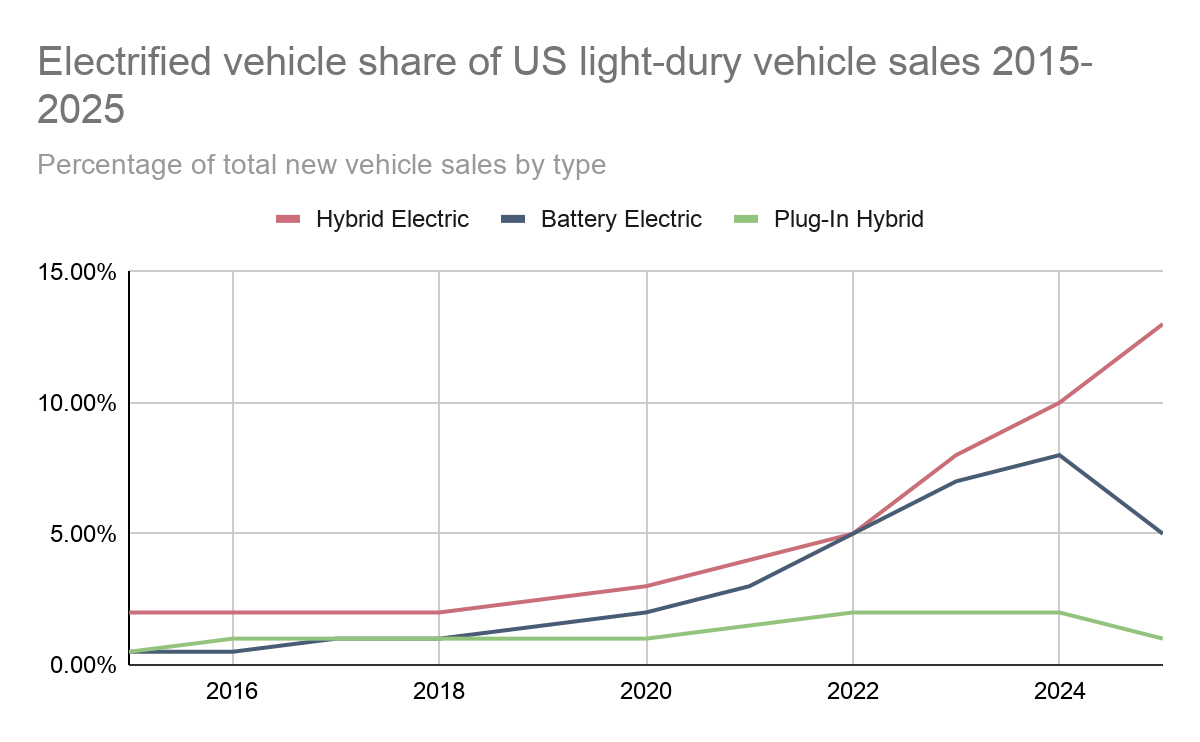
the U.S. Energy Information Administration. Hybrids still require oil changes, brake service, and routine maintenance, but with added drivetrain complexity that independent shops are often not equipped to handle. Franchise operators with proper training and diagnostic tools have a genuine edge there. Pure EV specialization remains a longer-term play, dependent on policy and infrastructure timelines that are still unsettled in the U.S. market.
Most successful operators are hands-on through the early build phase. Those who eventually step back earn that flexibility by putting the right infrastructure in place first:
- Hiring a strong service manager or shop foreman who can run daily operations independently
- Implementing scheduling and workflow systems that function without owner involvement at every step
- Setting clear throughput and ticket average benchmarks that indicate when the operation can run without direct oversight
Buyers who skip that foundation tend to underperform the numbers.
Steady Growth and Institutional Backing
Automotive franchise unit counts are growing modestly; the IFA and FRANdata 2026 outlook projects 0.2% establishment growth and 0.5% output growth for the year. That is not the kind of growth that generates headlines, but it is the kind that draws institutional capital, and private equity has taken notice. M&A activity across the automotive services sector accelerated in 2024 and 2025, with platform companies acquiring multi-location operators and specialty service chains to build scaled networks.
When private equity begins consolidating a category, it generally signals that the recurring revenue model and the demand fundamentals have been stress-tested and validated. Automotive aftermarket services have passed that test. The IFA report notes that brands with "strong technology, operations, and supply chain infrastructure" are increasingly attracting PE interest, and automotive service franchises that have invested in AI-driven diagnostics and EV capabilities are increasingly fitting that profile. This is no longer a fragmented market of independent operators. It is a maturing, institutionally validated sector with a long demand runway.
Is Automotive the Right Franchise for You?
Automotive franchise profitability holds up well against most categories available to investors in 2026, including recurring revenue, demand driven by fleet-age dynamics that are not reversing, EV tailwinds for operators who move early, and growing institutional validation of the model. That combination is more durable than much of what the broader franchise market is currently offering.
The variable is operational execution. Get technician recruitment, retention, and EV readiness right, and the income benchmarks are achievable. Underestimate any of those, and they are not.
At Franchise.com, we’re here to help you find the ideal franchise match. If automotive fits your investment profile, see our guide to the best automotive franchises for a curated breakdown of leading brands, entry costs, and ownership fit. If it does not, there are hundreds of other categories worth a serious look.
Start your franchise journey today.
Individual results vary by market, operator, and execution. Consult a franchise attorney and financial advisor before making any investment decision.
```
Skip the guesswork. With access to hundreds of vetted brands and over 25+ years of helping entrepreneurs find the right fit, Franchise Ventures is the most efficient way to turn interest into ownership.
Categorized Under: Franchise Information, Franchise Ownership
Other Franchises Looking For Owners Like You
Want to compare franchise opportunities side by side? Start Here
